Archive for category english
The medium is the message
Posted by kmcg2375 in books, digital storytelling, education, english, Lit_Review, research, technology on June 30, 2011
“The medium is the message” is a phrase coined by Marshall McLuhan meaning that the form of a medium embeds itself in the message, creating a symbiotic relationship by which the medium influences how the message is perceived. (from Wikipedia)
The more I think about this issue of medium, the more unsatisfied I am with the way that medium of production is dealt with in the English curriculum.
While English teachers continue to be led by debate over the definition and role of Literature in English, and over the best way to teach language, questions of medium have been significantly sidelined.
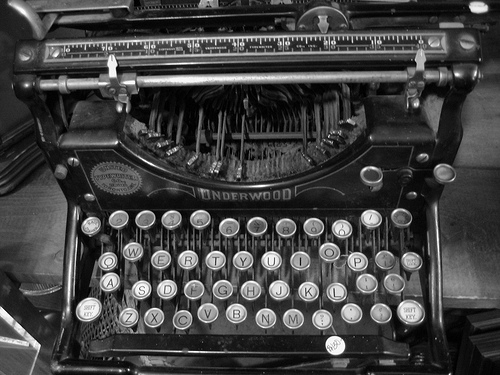
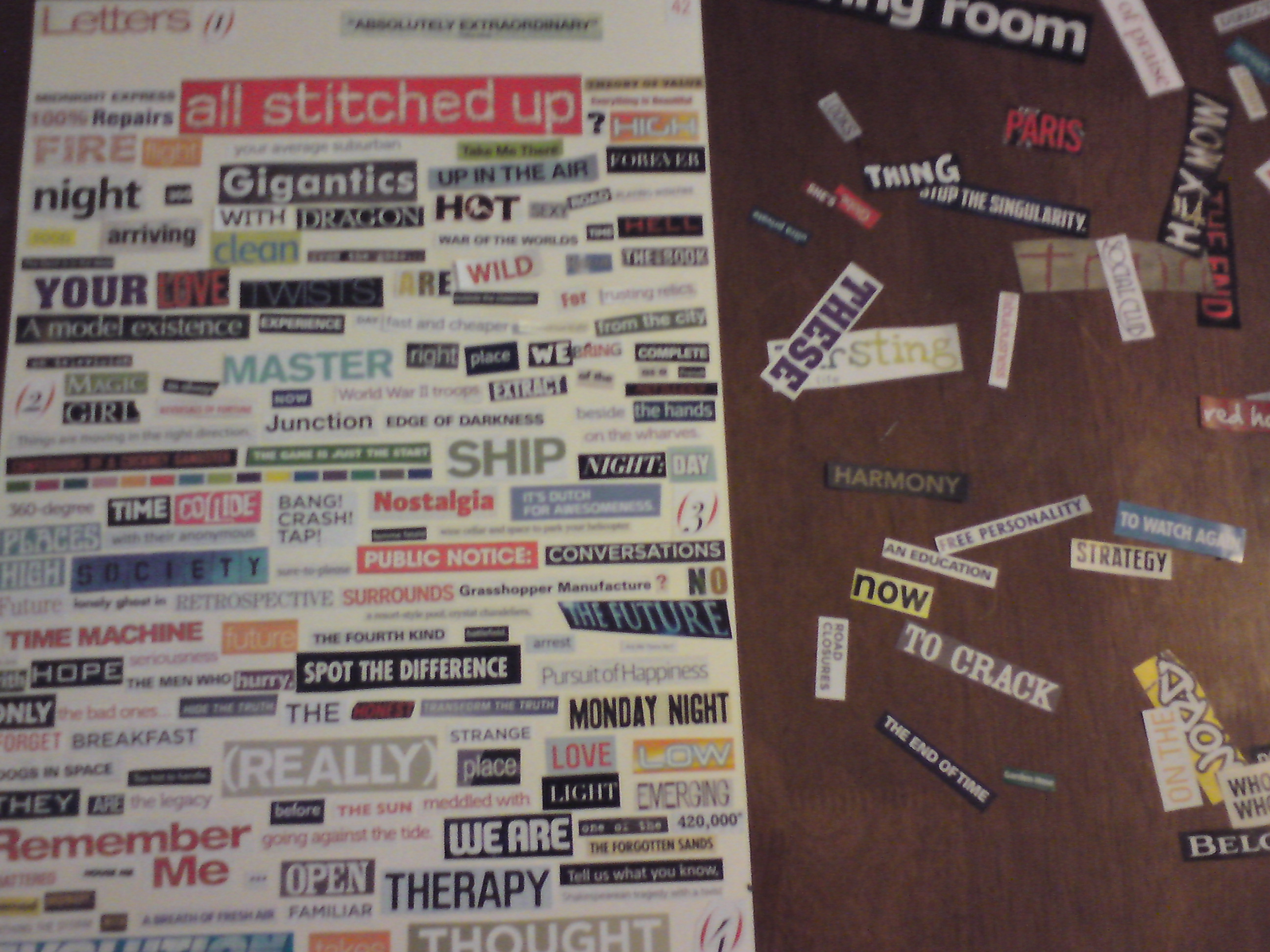


It also seems clearer to me now why subjects like Drama and Media (content areas that technically sit under the umbrella of English, if you accept that English is a study of how meaning is made through language and texts) go off and take up their own space in many curriculum. It’s not just because those fields have their own traditions and pedagogies that need space, or because they have industries that create an economic drive for the subjects to continue. It’s also because those field require keen attention to production elements, including issues of medium.
Little wonder that Drama, which often deals with live performance of language, dies a slow death in English classrooms where the curriculum is still dominated by print literacy.
Little wonder that we still can reconcile the gulf between ‘literary’ and ‘digital/electronic’ texts in the Australian curriculum (medium is not a genre!)
To move anywhere with this line of thinking will require some careful thought about the overlap between the words:
- media as-in-the-artisitic-means-of-production and
- Media as-in-the-field-of-media-studies.
Thanks to carolyn for stimulating my thinking on this. Connecting the concept of medium back to the concept of narrative helped the penny drop today!
List of Artistic Media
Posted by kmcg2375 in books, digital storytelling, english, Lit_Review, social media on June 9, 2011
Some more thinking about what we mean when we say ‘medium’ in English curriculum…this list of artistic mediums has been helpful in contextualising English as a subject area within a broader notion of ‘arts’:
In the arts, a media or medium is a material used by an artist or designer to create a work.
- Architecture
- Carpentry
- Digital
- Drawing
- Film
- Light
- Literature
- Natural World
- Painting
- Performing Arts
- Photography
- Printmaking
- Sculpture
- Sound
- Technology
- Textiles
Wikipedia ‘List of Artistic Media’ http://en.wikipedia.org/wiki/List_of_artistic_mediums
Within that list, the medium of literature appeared with the following explanation and links:
Literature
Main articles: Literature and Writing implementThe art of writtenwords and typography is traditionally an ink and printed form on paper or is creatively written with many forms of media.
Common writing media
- Digitalword processor and internetwebsites
- Letterpress printing and computer printing
- Marker
- Nib (pen)
- Pen and ink
- Pencil
- Quill
Common bases for writing
This is food for thought.
The investigation into medium continues…

Media – Definition
Posted by kmcg2375 in english, Lit_Review, social media, technology, university on June 8, 2011
Was looking for a good defintion for ‘medium’ in English and along the way have found my new go-to definition for media:
MEDIA as a word derives from the plural of Latin medium, meaning ‘middle’ or ‘between’ (hence ‘mediator’ as a ‘go-between’, also medieval, coined in the nineteenth century to label the age between the classical period and the Renaissance). From the early twentieth century, however, it has become increasingly common to talk of ‘the media’ (definite article and plural). The media thus understood mean two interrelated yet distinct things:
- those specifically modern technologies and modes of COMMUNICATION which enable people to communicate at a distance, characteristically through print (especially newspapers and magazines); the various telecommunications (‘tele-‘ comes from the Greek word for ‘far’, hence telegraph/’far-writing’, telephone/’far-sound’, television/’far-sight’), as well as film, video, cable, satellite and the Internet;
- by extension, the institutions which own and control these technologies as well as= the people who work for them (e.g, newspaper proprietors, TV and film companies, advertising agencies and governments, as well as reporters, camera operators, editors, producers, presenters, etc.).
Pope, R. (2002) The English Studies Book: An introduction to Language, Literature and Culture (2nd edition)Routledge, London. p.68
Book Art
Posted by kmcg2375 in english, university on June 7, 2011
Long have I prefered DeviantArt to Flickr, as I like the more ecclectic collection of ‘deviations’ (or text/art/photo/whatever-you-submissions) to the focus on photography at Flickr.
One of the best thinigs that I have found through my ramblings through DA are the other (seemingly increasing amount of?) ‘deviants’ and groups working on pieces of BOOK ART.
Take for example this whole group dedicated to making book arts:
http://book-arts.deviantart.com/
Or this group, where altered books are featured (I think the difference is a focus on assemblege?)
http://alteredbookgallery.deviantart.com/
Here are some examples of two excellent pieces by the deviant hogret:

the books never tell you. by hogret
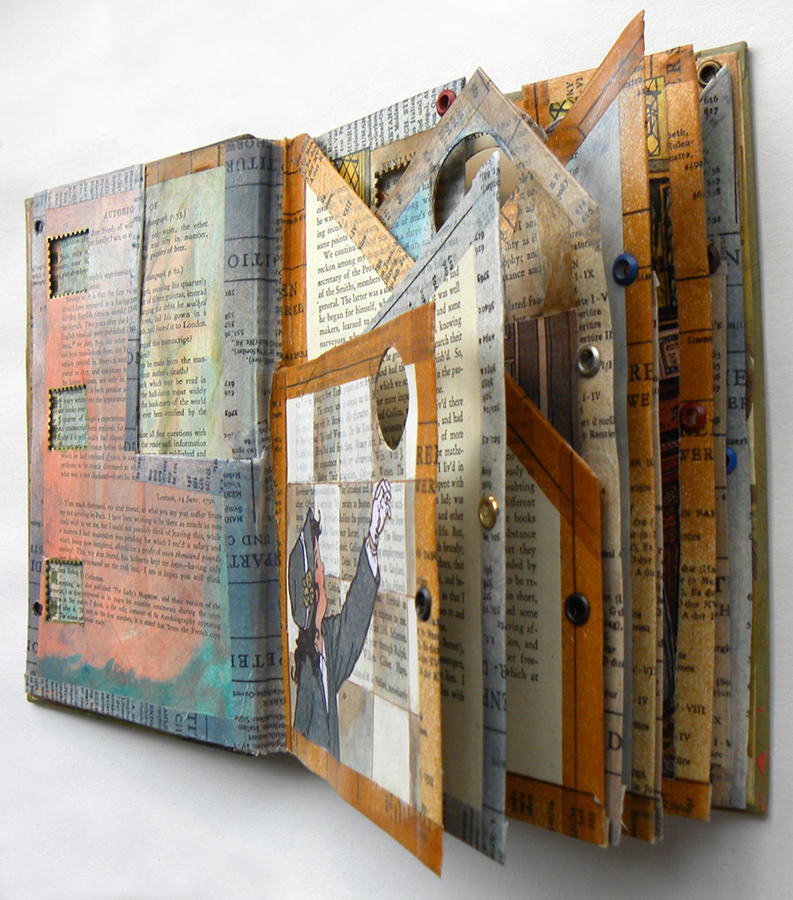
autobiography (work in progress). by hogret
The other genre of visual/written blending featured heavily in the DeviantArt groups is visual poetry. From what I can see it’s a more established genre, but please tell me more if you know.
Some of my favourite pieces come from deviants carrieola and giantshadow, who often contribute their work to the Daily Poetics group.
Here are a couple to help you get the idea:

cosmic cradle on canvas. by carrieola

universed. by giantshadows
Enjoy 🙂
Chat to Hemingway 0.5
Posted by kmcg2375 in books, digital storytelling, english, learning community, technology, university on May 26, 2011
Having the best time right now chatting to Simon Groth’s chat bot.
Hemmingway 0.5 is a chat bot based on the character in the eponymous short story. You can chat to him about anything you like.
Simon is a real find. Made getting up today totally worth it!
Simon Groth is a writer and editor whose first two novels were shortlisted in the Queensland Premier’s Literary Awards and whose short fiction has been published in Australia and the United States. His co-edited collection Off The Record: 25 Years of Music Street Press (with Sean Sennett), was published in 2010.
Simon is the manager of if:book Australia, exploring digital futures for authors, readers, and publishers.
Do yourself a favour and go browse his site: http://simongroth.com/
At least go and chat to Hemmingway.
Evolution of storytelling
Posted by kmcg2375 in books, digital storytelling, english, social media, technology on May 25, 2011
I just came across this excellent illustration posted by Dan Sellars of the way that storytelling traditions have evlolved over time to reflect and utilise the technology available:
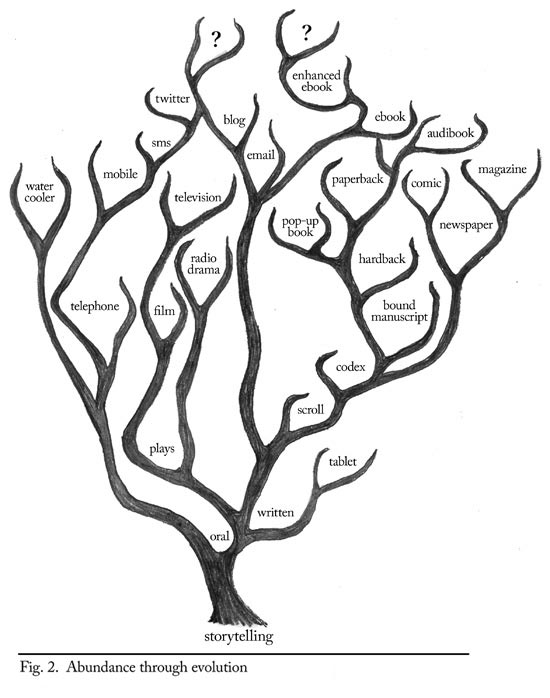
If you like that, you will no doubt also like another image he posted (in 2009) ‘Characters for an Epic Tale’. Check it out!
Global Poetry Project
Posted by kmcg2375 in education, english, learning community, online tools, personal, social media on May 13, 2011
This tweet came across the screen tonight and I just thought: YES.

Now I’ve joined the Global Poetry Project Ning. I figured tonight was as good a time as any to post a poem in a new place and this one promises ‘a space for members to expand upon their cultural views through the writing and reading of poetry’.
I penned this poem last week. I’ve been reading The Hunger Games by Suzanne Collins and that’s where the title and some of the inspiration came from.

The project aims to provide “a safe and open atmosphere for all visitors and contributors alike” and has many student contributers. So if sharing your poems and reading the work of others in a supportive environment appeals to you, why not consider joining the project, friending me and adding a poem of your own!
Sociolinguistics: language and cultures
Posted by kmcg2375 in books, education, english, Lit_Review on May 12, 2011

I found this excellent set of definitions in the text Language and Literacy in the Early Years 0-7 by Marian Whitehead. Thought it worth posting here.
My hope is that this post marks the start of a new category on this blog – ‘Lit_Review‘ – for posts that contain material of the kind you just know you’re going to want to find again later when you’re doing that review of research literature…
Language Variety – Summary
- Language variety is reflected in the different language of the world but it is also a feature within apparently uniform language communities.
- Two major aspects of variety within a language are accent and dialect. Accent refers solely to differences in pronunciation – the sounds of a spoken language. Dialect is a variety of a language with distinctive variations in syntax and vocabulary, as well as pronunciation.
- Standard English is the high-status dialect of English that is used in the written form of the language. It is also used widely in business and professional circles, the media, education and the teaching of English as a foreign language. Standard English dialect may be spoken with any accent.
- Received Pronunciation is a prestigious non-regional accent associated with higher education and, traditionally, the private school system in the UK and Oxford and Cambridge universities (Oxbridge).
- Variety is also found within every individual’s linguistic repertoire because we all switch registers, changing the degrees of formality in our language, according to the social context. Individuals use a variety of other forms, including other dialects, slang and jargon. We all develop a unique idiolect that makes our voices and language styles instantly recognisable.
Whitehead, M. (2010) Language and Literacy in the Early Years 0-7 (4th Ed.) Sage Publication: London. p.25
Neat summary eh? Pass it on!
Banned books
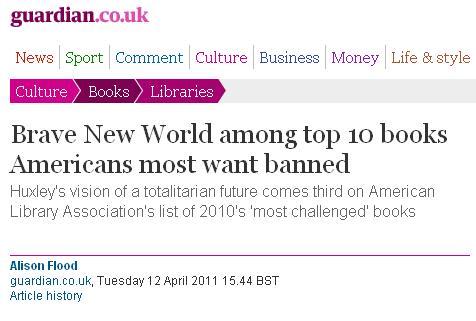
From a recent article at guardian.co.uk by Alison Flood:
From Suzanne Collins’s post-apocalyptic hit The Hunger Games to Stephenie Meyer’s vampire bestseller Twilight, American parents have been making it their mission to complain about some of the most popular books published in recent years.
So…how many of these have you read?
1. “And Tango Makes Three” by Peter Parnell and Justin Richardson
2. “The Absolutely True Diary of a Part-Time Indian” by Sherman Alexie
3. “Brave New World” by Aldous Huxley
4. “Crank” by Ellen Hopkins
5. “The Hunger Games” by Suzanne Collins
6. “Lush” by Natasha Friend
7. “What My Mother Doesn’t Know” by Sonya Sones
8. “Nickel and Dimed: On (Not) Getting By In America” by Barbara Ehrenreich
9. “Revolutionary Voices” edited by Amy Sonnie
10. “Twilight” by Stephenie Meyer
For more information on book challenges and censorship, please visit the Office for Intellectual Freedom’s Banned Books Week Web site at www.ala.org/bbooks.
An Introduction to the CLDR Project
Posted by kmcg2375 in books, education, english, online tools, technology, university on May 3, 2011
Children’s Literature Digital Resources.
Australian schools can now access the full texts in this online resource.
Others can access the Auslit resource through university and other library databases.
-
You are currently browsing the archives for the english category.
Nominated!

- Australian English Teachers
 9 members
A group for English teachers in Australia to discuss the books they are reading, and the books th...
Books we've read
View this group on Goodreads »
Share book reviews and ratings with Australian English Teachers, and even join a book club on Goodreads.
 Kelli McGraw
Recent Comments