Archive for category education
Using social media to support FYE
Posted by kmcg2375 in education, learning community, online tools, social media, technology, university on March 19, 2013
Ah, “FYE” … the new acronym in my life!
It stands for First Year Experience, and now that I’m the FYE Coordinator for my Faculty, it’s something I’ve been thinking about a lot.
As a school teacher, the role reminds me a LOT of being a Year Advisor, but with one difference. Instead of staying with my year group and looking after them until they graduate, at the end of the year I send my group off to second year, and prepare to look after the FYE of a new cohort.
My FYE jobs
This is my first year in the role, and one of my ‘big jobs’ is to consult with unit coordinators to identify students in need of help with academic literacy. Students have a raft of assignments due around weeks 4-6 and using those we can make early recommendations for study skill support.
I’m also one of the main points of contact for first year students, and I get to go to many (very interesting, seriously) meetings about student engagement and improving campus life. My personal engagement project is a knitting club that I am launching for Education students in Week 5 of semester 🙂
Enter Twitter

Something else I am trying this year is the establishment of a Twitter account (1styear_edu) to communicate messages relevant to students in first year Education. I’ve stated nice and clearly in the bio that I am behind the tweets, and the profile pic is a shot of our lovely main admin building at Kelvin Grove campus. I’m not following students back (yet), but am following things that I think they would like, or that I would want to retweet from.
So far I’m up to 93 followers, out of a potential 650 (ish). It’s Monday of week 4, out of 13 week semester, and on the whole, I am happy!
Yes, yes, some things I already know:
- Almost all first year students use Facebook, with only about 10% entering our courses using Twitter. We know this from a student survey. I think this is great, because it means most of them are up to date with the digital literacy skill needed to use Twitter, and just need some guidance to transfer those practices.
- Not many students like Twitter when they first join it. I know this anecdotally, but I don’t see this as a reason not to persist with the service. In fact, I think it’s good to put students out of their learning ‘comfort zone’ … especially students that are trying to become teachers!
- Most students won’t go to Twitter regularly for announcements. That’s OK! They should be going to the institution’s ‘Blackboard’ (or other LMS) for essential announcements. Although I do repeat some key announcements on Twitter, it would be inequitable to announce important stuff there without also placing it on Blackboard. Twitter is for engagement, tips, and social study support.
- Students don’t use their social media for learning. Well, I know that some already do, actually – you should meet them! But I sincerely hope that by the time the others graduate from a year (or four) at QUT that their attitude to Personal Learning Environments will have changed! Using Twitter is just one thing I can do to help them over this threshold.
What is to come?
I hope that students will increase their take-up of Twitter for crowdsourced note taking. I’ve attempted to lead some tweeting using the unit codes #EDB006 (for ‘Learning Networks’, the only core unit that first year students share) and #CLB320 (a unit on ‘Studies in Language’ that about half the cohort undertakes).
I also want to show other teachers the power of using tools such as Storify to collect tweets about a topic that can be used later as a teaching aid. For example, here is my collection of tweets from the start of EDB006:
http://storify.com/kmcg2375/edb006-tweets-and-media-weeks-1-and-2
Other than that, I think I’m just hoping for some more discussion between students … but I don’t mind if that doesn’t really kick in until later in their degrees. For now I’m just stoked to have seen any interaction at all!
93 followers, baby … how long will it take me to double it? I’ll be sure to report back when we hit 186 😉
A ‘rhizomatic’ take on Semester one so far
Posted by kmcg2375 in education, online tools, reflections, research, social media, university on March 11, 2013
Last week I had the good fortune to hear Professor Diana Masny speak about her Deleuzian approach to researching multiliteracies theory (which she referred to as ‘MLT’). Masny is from Ottowa, Canada, and is an adjunct prof at QUT.
In this presentation I was returned to the idea of ‘the rhizome’, something that had interested me when I encountered the work of Deleuze and Guattari. The idea behind looking at things rhizomatically is that we can stop focussing on binary oppositions, or organising concepts into ordered taxonomies and such. Instead, rhizomatic analysis involves looking at things and ideas spread/propagate…and at where new possibilities ‘shoot off’ out of of what already exists.
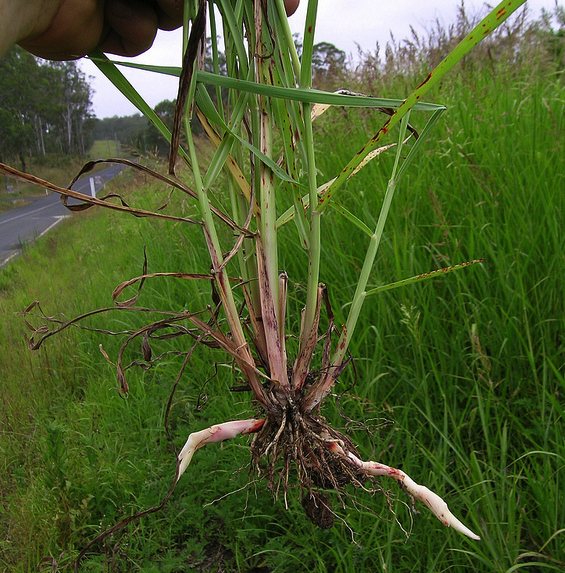
A rhizome in plant form
This talk by Masny was interesting for a number of reasons to do with designing research methodology, as well as considering MLT from new angles. One thing that inspired me was the way that her presentation was organised around ‘entry points’ to her own topic as a rhizomatic collection of findings. This is in contrast to a presentation that tries to summarise ‘key findings’ or ‘ways forward’. Seeing as I most often use my blog to reflect on ‘findings’ and ‘planning’, I thought it might make a nice change to adopt Masny’s (after Deleuze’s) approach of exploring the ‘entry points’ into my practice so far this semester…
ENTRY POINT: Attendance
At QUT we have a policy that attendance is not to be counted in any way toward assessment, and that students choosing to catch up on their study from home are to be supported in that choice. I have heard some lecturers complain about this – they think students would learn better if they turned up to all the classes, and wish the university would enforce this. Most of us, however, respect the purpose of this arrangement, which is to provide flexible study options for the grown-up human beings that are our ‘students’, and cater for a range of learning styles. Personally I find it very motivating, as it forces me to think about HOW I can make my lessons “worth coming to”!
I’m really happy with the attendance rate in my classes at the moment. Out of the 110 students I have studying on campus, almost 100% turned up in Week one, and the students that were away mostly emailed in their apologies. In Week 2, attendance in tutorials and the lecture was down to about 85%, which is to be expected. What I am eager to see is that 85% attendance rate maintained for the rest of the 9-week semester, rather than drop of over time to 20-50%, as other lecturers often report. I’m pleased to say that in the past few years here, I haven’t noticed the same kind of drop of, and I like to think this reflects the usefulness of my classes.
ENTRY POINT: Engagement
As always it has been a slow start on Twitter…but as always, there are several students ‘coming around’ to the tool already and engaging with informal peer tutoring as well. Once again, I am glad I chose to persevere with introducing students to an unfamiliar (and for many of them, unloved) social media tool.
I had a really great out-of-context engagement moment as well last week, on Pinterest. I use Pinterest among other things to collect useful resources for English teachers, and one day I saw a collage about English teaching and ‘re-pinned it’ to my board. I thought (and commented) ‘wow…this is just like an activity I do in class!’. Then I realised that I was following one of my students already, and that it was her! Funniest bit was though, she had been following me too without realising who I was, or making any connection to out uni lives. Good times!
There has been a growth in socia media profiles and ‘chats’ that I can now connect my students to, and the most important of these is the #ozengchat that takes place on Twitter on Tuesday nights. Feeling like they are engaging with ‘real teachers’ seems to be helping with motivation in the class, but at the moment that’s just my anecdotal take on the situation.
ENTRY POINT: Assessment
In my class students undertake THREE assessment tasks:
- Personal essay on teaching philosophy and resource analysis (individual, 30%)
- Lessons plans for a junior English class (in pairs, 40%)
- Portfolio of completed learning ‘challenge tasks’ (individual, 30%)
What I like about what I have achieved with this set of assessments is that there is a balance of individual and group work, that there is a variety of tasks, and that no task is worth more that 40%.
At this point I’ll put myself out there to say I am disappointed to see how many uni coordinators choose to use just TWO assessment piece in their own classes. This is not good practice imo! Having less assignments does mean a smaller marking load for the lecturer, and less due dates for the student, but at what cost?
I really do believe that students in uni should not have assessments that are worth 50% or over, as this is too high-stakes to promote good learning. To do this, you must have more than two assessments for a unit in a semester.
FINAL WORDS: The CLB018 ‘assemblage’
In the theory of Deleuze and Guattari, the context of my CLB018 class provides an assemblage of bodies and things that can produce any number of effects. I hoe to keep reporting throughout the semester on the effects (and affects) of our assemblage!
In the meantime, any comments on these POINTS OF ENTRY are most welcome.
Classes start tomorrow!
Posted by kmcg2375 in education, learning community, reflections, research, university on February 26, 2013
The week we’ve all been waiting for, week one of the university semester, is finally here!
This semester, I will be focussing on the following areas of my English Curriculum Studies unit for development:
- Building in more support for student reflective writing. The design of my lesson planning assignment last year included a tutorial presentation of the key teaching strategies, but it didn’t really work that well. So I plan to change this element of the assessment to a written reflection, and add two targeted activities to tutorials in mid-semester to more constructively scaffold the task.
- Finding places to make connections between English curriculum studies content knowledge and other professional frameworks. In particular I want to ensure that students understand how the Australian Professional Standards for Teachers can be used to self-diagnose areas of strength and directions for further learning, and are knowledgable about the Productive Pedgagogies framework that is advocated by Education Queensland.
- Registration. After three years of running this unit it will be time to write up the final unit design, as well as a ‘scope and sequence’, so that the unit is ready to be passed on. At school we called this ‘registration’ – when the Head Teacher would check out your unit plans at the end of the semester and ensure you met your learning objectives. Here at uni there are other other mechanisms in place, but the Head Teacher check isn’t one of them. And official changes are made so sllllloooowwwlyyyy. So, for my own piece of mind, I’m going to put my own unit through a final tick-and-flick, then prepare my reflections and field notes for scholarly publication and sharing.
I’ve included below another classroom poster I’ve made, a visual resource to support my students’ engagement with the Productive Pedagogies – feel free to use and share (though note that the values/opinions expressed on it about alignment with ‘prac’ are only my own POV!).
Now…deep breath!
And once more into the breach!

Productive Pedagogies for Prac (image by Kelli, CC-BY-SA)
Making content posters for my classroom walls
Posted by kmcg2375 in education, technology, university on February 13, 2013
Over the years I have seen many creative and high utility wall displays in other people’s classrooms. Imelda Judge for example is wizard with cardboard and hot glue – sharing a classroom with her in 2009 was a wild apprenticeship in classroom decoration!
I say ‘other people’s classrooms’ because I haven’t had a lot of success with this kind of thing!
2008: One time, I thought I had made a pretty successful poster of quotes from King Lear for my Year 12s…but they never seemed to look at it:

2009: Far more successful displays have tended to come out of students’ own work being put up, such as this display of lines of poetry after a lesson with Year 10:

2011: And the ‘tree of knowledge’ inspired display I’ve had in my uni teaching for the past 18 months was wrongly positioned at the back of the room, and a little haphazard to boot:


Today: When I saw Bianca’s tweet today with a picture of her classroom wall painted with blackboard paint, I thought ‘how cool is that!?’
…which motivated me to start designing some posters to add to my classroom this semester.
I’m going for a digital look, rather than getting all crafty with the glitter and paint. I plan to print them out in colour A3 and get the students to decide where they think they should be put up in the room. Here is the first one – two of the key concepts I focus on in my English Curriculum Studies unit:

by me, Kelli McGraw (CC-BY-SA) free-to-use
Mind you, the room I teach in has been a blu-tak free zone for the past two years, because it got a new paint job. This has been severely limiting. While it’s lovely on one hand to teach in a clean and modern space, it’s hard to use a room when you can’t put things up where you want. Teachers who don’t have a ‘home room’ will know the feeling!
The display I have been using so far, however, has been taking up one of the big green write-on groupwork boards in the room (to avoid having to blu-tak the wall). I don’t think I can keep using that board – I need it in my class, and other teachers must too.
So walls, you’ve had two years…the blu-tak is now a-comin 😉
If anyone else has electronic copies of pedagogy-inspired posters that they would be happy to share, I would love to see some more designs. And if you have any ideas for what else you think I should be flagging for 2nd year preservice English teachers, tell me all about that too!
The cost of preparing for class
Posted by kmcg2375 in education, reflections, school, university on February 8, 2013
Each year before school goes back, teachers can be found out and about in stationery and bargain basement stores, stocking up on materials for the coming term or semester.
New diaries, pens, highlighters, stickers, desk organisers, poster cardboard, and more.
For most school teachers around Australia the first day back was a week ago, but being a university lecturer, my classes don’t start until the last week in February. This gives me a few more weeks up my sleeve to get to the shops and buy some new items to refresh my wall displays and writing workshop materials.
(By the way, awhile ago I read an article that said teachers, on average, spend about $350 per year on classroom supplies that aren’t provided by the school. Isn’t that heaps!! Did anyone see that article? I can’t find it again now…)
$10 spend
One thing I have to top up every semester is my store of paper and card that students use to make visual poetry in English Curriculum tutorials:

These can be picked up cheaply at most Bargain stores, Reject Shops etc. I got mine on sale in Kmart, which I guess means they’d be in Big W etc as well.
I’m thankful that I have access to most basic supplies for teaching at uni – plain paper, lead pencils, glue sticks and scissors are there for the ordering and taking. I still have to buy my own special stuff – black textas, wall fastenings, posters and craft paper – but in my public school teaching days, we weren’t even allowed to take spare A4 paper out of the cupboard for class! You also got just 4 whiteboard markers at the start of the year, and you had to make em last…
Gonski that!
$5 spend

Because I teach older students, you would think that most could be relied on to bring their own books and pens to class. Not so!
The $5 spend on spare books and pens for students that turn up to class without these things in week one is a habit that most teachers of disadvantaged students pick up in their career. I am no exception, and I can attest that even at university, some students are doing it financially tough.
(I can just hear the TV ad voiceover: “For just 32 cents, one of these exercise books will get a disorganised student off to the right start for a whole year…”)
I picked these up at Woolies on an impulse buy – I know 48 page exercise books can be picked up elsewhere for as little as 9 cents a book though.
What do you regularly buy for your classroom?
I won’t be rude and ask people to confirm or deny whether they think they spend the average $350 a year on their class. Partly because I can’t even be sure that figure is right…but also because I’d rather know WHAT you choose to spend on.
How about it – are you a crafty practitioner? Or perhaps your annual spend went toward a personal data projector, or other tecchy toys for your class. Did you have to pay to subscribe to a website for them to use? Do you personally shell out to get their assignments printed in the library?
And if not…why not?
Twitter #hashtags for English teachers to follow
Posted by kmcg2375 in education, learning community, online tools, social media, technology on February 5, 2013
Are you a teacher? An English teacher, perhaps? Trying to find where the good chats are on Twitter? Look no further! Start by searching for these three English-curriculum-related hashtags and you’ll be on your way to finding and conversing with other teachers just like you!
#ozengchat (weekly)
If you search for this hashtag on Tuesday nights, you’ll find Australian English teachers talking about their craft, ideas and resources.
The #ozengchat group also has a page on Edmodo, which is where voting for the weekly topic takes place (a group code for Edmodo can be obtained by tweeting @vivimat78). Vivian, who convenes the chat, also collects our chat tweets in a weekly online storyline using ‘Storify’.
#ozengchat officially takes place on Tuesday from 8.30pm – 9.30pm, Australian EDST (i.e. GMT +11)

australia-map-flag-olga – Flickr image by lednichenkoolga (CC-BY-2.0)
#engchat (weekly)
As well as a special hashtag for Australian folk, there is also a more general #engchat hashtag that is coordinated for a more global chat.
Currently the #engchat tag seems to be heavily used by teachers in the US – as a result you can see some interesting discussion taking place there now about the implementation of ‘Common Core Standards’ across their states. And of course also a lot of resources being shared that we otherwise might not stumble across through our own local networks!
#engchat takes place at 7pm in the States (EST) every Monday, which is 10am – 12pm on Tuesdays in Australia (Eastern time).

The Globe (78 / 365) – Flickr image by somegeekintn (CC-BY-2.0)
#literacies (bi-monthly)
You can follow the #literacies hashtag on the 1st and 3rd Thursday every month. The convenors are based in the US, so the chat happens on Thursday night for them, which is Friday lunch-time in Australia.
This chat is supported by a very up-to-date and informative blog, where a record is kept of the chats and upcoming topics.
The #literacies tag can be added to your tweets at any time, but Friday 12pm – 1pm (Eastern time) is when you’ll see it live in Australia (i.e. Thursday night 8-9pm in the US).

Literacy mountain – Flickr image by dougbelshaw (CC-BY-2.0)
A tip for non-tweeters:
If you want to check out these tags, but don’t really want to get involved in Twitter or create your own account, never fear!
You can search for these tags any time by going to the Twitter homepage and typing the hashtag (complete with its ‘#’ at the start) into the search bubble. You will need to make your own account to reply with your own tweets, but until then there’s no harm in lurking and learning from afar 😉
RSA Animate ‘Drive’: Purpose, mastery, self-direction
Posted by kmcg2375 in education, university, video games on December 12, 2012
I just came across this excellent 10 minute clip from the RSA Animate series. It was put up in 2010 and has had over 9.6 million views on YouTube, so some of you may have seen it the first time around. The clip is called Drive: The surprising truth about what motivates us, and is an animation of a talk by Dan Pink.
I’ll be adding this clip to my English Curriculum Studies reading list next semester – a way to link with my students’ other studies in ed. psych.
I’ll also be making a bigger effort to bring in those concepts – mastery, purpose and self-direction – to explain the pedagogical strategies involved in project-based, play-based, inquiry-based and challenge-based learning. I’d be grateful for any insights about this that you folks care to drop as a comment here!
Enjoy the clip!
Building up my Pinterest resources
Posted by kmcg2375 in education, learning community, online tools, social media, university on December 8, 2012
I wrote a little while ago about my venturing into the world of Pinterest. My first board was a collection of images and links relating to ‘Indigenous Studies‘.
This post is just an update on what else I’ve been pinning that other teachers might like to check out.

English teaching – Pinterest board
On my board for English teaching I have links to professional associations, related groups and institutions, magazines and journals, classroom resources for English, and other stuff I think an English teacher might like.
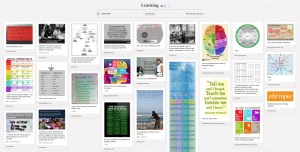
Pinterest board – Learning
When I started finding resources for learning in general that weren’t specifically about English, I created this board for pins about Learning. There are some especially good things up to re-pin from Edutopia and Edudemic.

Pinterest board – Brisbane
Finally, so that this post isn’t ALL work and no play, here is a link to the board I use to collect links to cool things to see and do in Brisbane. This board is great for when people come up here to visit, it means we always have a good list of things to do and see 🙂
If you’ve never used Pinterest before…
- Don’t stress out about missing out. I don’t see it as one of those “you absolutely GOTTA have an account!” tools. Anyone can go and browse my Pinterest boards, which I’ve invested time in because I like to curate, and also because I think my students enjoy the visual layout of links they would otherwise ignore in a reading list.
- My ‘addiction’ (read – compulsion to add pins!) to this tool waned after about four weeks, but I still find myself coming back to it and liking it five months after signing up.
- If you do decide after reading this post to go and make some Pinterest pin boards, ENJOY! I’ve really dug finding new resources this way, as well as thinking more carefully about how an icon or image ‘pin’ can represent an idea, association or resource.
Evaluating the HSC: An interview
Posted by kmcg2375 in education, HSC, personal, reflections on November 27, 2012
Last year I was interviewed by Melissa Wilson, a Journalism student from the University of Newcastle, about my views on the Higher School Certificate (HSC).
Melissa was in contact again recently, and this prompted me to ask if I could reproduce the interview here on my blog. She kindly obliged, and so here it is!
I was careful to read back over my answers, to make sure I still felt the same way about these issues. I do. I wish I could say that things were vastly different up here in Queensland. They’re not. When a Queenslander tells you there is no external exam for Year 12 in their state, they’re misleading you at best. Here is a bit of information from the QSA website about the Queensland Core Skills (QCS) test:
Preparing for the test
The Common Curriculum Elements are generic skills that students work with across their subjects; therefore the real preparation for the test goes on all the time and in every subject. The QSA also makes available a variety of test preparation resources, including Retrospectives and past testpapers (see QCS Test publications and Retrospectives and MC response sheets). Most schools provide some focused preparation for the test.
Hmm, sounds familiar.
But, I digress…
Here are my responses to the interview by Melissa Wilson:
Interview answers for Melissa Wilson (University of Newcastle, 2011)
Interviewee: Kelli McGraw (Lecturer, QUT)
- How do you feel about how the HSC is structured in 2011?
When I think about the HSC structure in 2011, the main things that leap to mind are the fact that studying English is mandatory, that half of the student assessment is based on a timetabled external examinations, and that a no more than of 30% of your school assessment is supposed to be ‘exam-type’. I think it’s really important for English to remain compulsory right up to the end of school, but I’d like to see more room for students to choose electives within the course, not just different levels i.e. Standard or Advanced English. At the moment I think the HSC is still structured in a way that is too rigid for students to feel like they have a lot of choice over their learning.
- Many people say that the HSC is focused on teaching students a whole lot of information that isn’t exactly relevant to them later in life – but instead they just regurgitate it in an exam and then discard it – how do you feel about that statement?
Personally, I can think of countless things that I learned in my HSC year (1998). In those days the emphasis on exams was just as great, but I am often surprised by the things I remember from senior high school and have found a lot of what I learned to be very relevant in life. Having to finish ‘major works’ for Visual Art and Drama also taught me valuable lessons about project management and self-directed learning, which I didn’t get from participating in written exams, so in that sense I guess I was lucky to be an ‘art-sy’ student.
I think the real problem with exams is not that students have to cram ‘irrelevant’ information – I think that all learning can be made relevant, depending on what you choose to do in life. The problem I find is that the examination system has too much of an effect on what happens inside the classroom. The constant pressure to cover content is a strain on students and teachers, and even though school-based assessment is supposed to involve deep learning and reflection, many schools I know of set far more than 30% of their assessments in an exam style in order to condition students in preparation for the external exam. So I think there is a ‘hidden curriculum’ in the HSC, which can dilute learning experiences based on the official subject syllabuses.
- And from this, what would you personally change about the HSC?
I think that the only assessment that students should have to do under exam conditions is the Trial. If more student work was assessed through project work, or using collaborative group tasks, or using portfolios, I think that students would feel more connected to the learning, and be motivated to achieve. Even though the HSC now uses criteria-based assessment, students are acutely aware that the HSC places them in competition with one another as in-class assessment ranks still play a role in determining a student’s final subject results, and the year culminates for most students in receiving a ranked national placement through the UAI. With only about 30% of students moving from school to university after Year 12, it seems like we compromise a lot of educational values for the sake of a privileged minority.
- How do you feel about the pressure and emotional stress that students endure throughout their HSC?
When I think about the stories that students have told me over the years – about how they feel inadequate, or like a failure in the face of HSC assessment tasks – it makes me really upset. I have seen a lot of students in Year 12 lose a lot of weight, with girls in particular showing signs of early and advanced eating disorders. Senior school is also a time when increased numbers of students pick up casual and part-time employment, in many cases out of a necessity to contribute to household finances. I think the HSC creates an environment where students are given too many adult responsibilities without being given the corresponding rights.
While schools play a vital role in developing students’ resilience and capacity for work, the emotional stress endured during the HSC year is too much, in my opinion. I read a study awhile back where Year 11 and 12 students reported symptoms of anxiety, depression and stress that fell outside the ‘normal’ range. We know that when this happens, students stop focussing on ‘mastering’ the material, instead focussing on performance; they stop believing in themselves, stop seeing the learning as a worthwhile goal, and switch to performance-oriented goals. Some of my own school friends took years to recover from the emotional damage of the HSC year, especially those whose final results didn’t meet expectations.

Good riddance to my English notes. Flickr image by Jean-Rene Vauzelle CC-BY-2.0
Coming up for air
Posted by kmcg2375 in education, personal, reflections, research, university on November 26, 2012
Hi folks – it’s been a bit quiet here on the blog, I know.
All I can say is … omg MARKING!
I have always had an interest in assessment, but this semester has made really clear to me how dire the situation is with our current practices.
I don’t want to ‘buy out’ my marking (i.e.pay someone else to do it for me) but I feel like I am wasting so much of my time at the grindstone, like a machine, writing the same lines over and over in delightful pink pen in the margins of my students’ work.
“Check the APA style guide for rules about how to format this”
“Formal essays require shorter paragraphs than this”
“Avoid rhetorical questions – make strong statements instead”
“Use your introduction to tell me what your main points will actually be, not to explain the structure of your work”
“Don’t use a quote as a sentence on it’s own – introduce it i.e. ‘Sawyer (year) explains that…'”
“You have not included reference to any unit readings in this rationale”
I worry about RSI. I worry about carpal tunnel! Marking more tasks electronically next semester will hopefully fix the hand ache, but what about the mind ache??
I’m not alone – every teacher reading this knows what I mean.
What are we going to do about it?

Portland Oregon & VA exam 46 – CC-BY-2.0 Flickr image by Parker Knight
-
You are currently browsing the archives for the education category.
Nominated!

- Australian English Teachers
 9 members
A group for English teachers in Australia to discuss the books they are reading, and the books th...
Books we've read
View this group on Goodreads »
Share book reviews and ratings with Australian English Teachers, and even join a book club on Goodreads.
 Kelli McGraw
Recent Comments