kmcg2375

This user hasn't shared any biographical information
Jabber/GTalk: kellimcgraw
A ‘rhizomatic’ take on Semester one so far
Posted in education, online tools, reflections, research, social media, university on March 11, 2013
Last week I had the good fortune to hear Professor Diana Masny speak about her Deleuzian approach to researching multiliteracies theory (which she referred to as ‘MLT’). Masny is from Ottowa, Canada, and is an adjunct prof at QUT.
In this presentation I was returned to the idea of ‘the rhizome’, something that had interested me when I encountered the work of Deleuze and Guattari. The idea behind looking at things rhizomatically is that we can stop focussing on binary oppositions, or organising concepts into ordered taxonomies and such. Instead, rhizomatic analysis involves looking at things and ideas spread/propagate…and at where new possibilities ‘shoot off’ out of of what already exists.
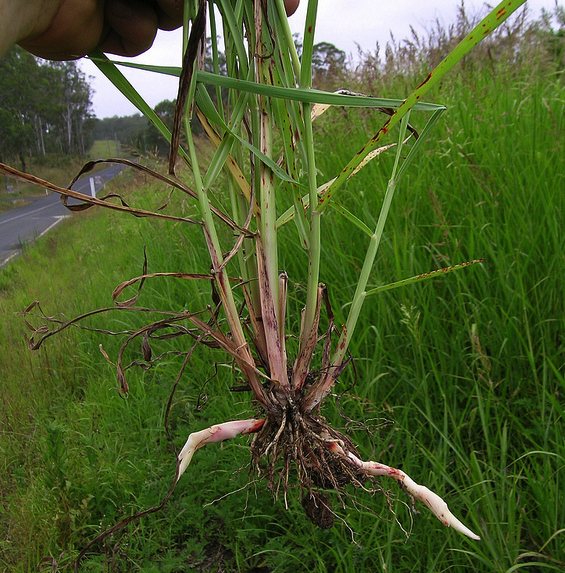
A rhizome in plant form
This talk by Masny was interesting for a number of reasons to do with designing research methodology, as well as considering MLT from new angles. One thing that inspired me was the way that her presentation was organised around ‘entry points’ to her own topic as a rhizomatic collection of findings. This is in contrast to a presentation that tries to summarise ‘key findings’ or ‘ways forward’. Seeing as I most often use my blog to reflect on ‘findings’ and ‘planning’, I thought it might make a nice change to adopt Masny’s (after Deleuze’s) approach of exploring the ‘entry points’ into my practice so far this semester…
ENTRY POINT: Attendance
At QUT we have a policy that attendance is not to be counted in any way toward assessment, and that students choosing to catch up on their study from home are to be supported in that choice. I have heard some lecturers complain about this – they think students would learn better if they turned up to all the classes, and wish the university would enforce this. Most of us, however, respect the purpose of this arrangement, which is to provide flexible study options for the grown-up human beings that are our ‘students’, and cater for a range of learning styles. Personally I find it very motivating, as it forces me to think about HOW I can make my lessons “worth coming to”!
I’m really happy with the attendance rate in my classes at the moment. Out of the 110 students I have studying on campus, almost 100% turned up in Week one, and the students that were away mostly emailed in their apologies. In Week 2, attendance in tutorials and the lecture was down to about 85%, which is to be expected. What I am eager to see is that 85% attendance rate maintained for the rest of the 9-week semester, rather than drop of over time to 20-50%, as other lecturers often report. I’m pleased to say that in the past few years here, I haven’t noticed the same kind of drop of, and I like to think this reflects the usefulness of my classes.
ENTRY POINT: Engagement
As always it has been a slow start on Twitter…but as always, there are several students ‘coming around’ to the tool already and engaging with informal peer tutoring as well. Once again, I am glad I chose to persevere with introducing students to an unfamiliar (and for many of them, unloved) social media tool.
I had a really great out-of-context engagement moment as well last week, on Pinterest. I use Pinterest among other things to collect useful resources for English teachers, and one day I saw a collage about English teaching and ‘re-pinned it’ to my board. I thought (and commented) ‘wow…this is just like an activity I do in class!’. Then I realised that I was following one of my students already, and that it was her! Funniest bit was though, she had been following me too without realising who I was, or making any connection to out uni lives. Good times!
There has been a growth in socia media profiles and ‘chats’ that I can now connect my students to, and the most important of these is the #ozengchat that takes place on Twitter on Tuesday nights. Feeling like they are engaging with ‘real teachers’ seems to be helping with motivation in the class, but at the moment that’s just my anecdotal take on the situation.
ENTRY POINT: Assessment
In my class students undertake THREE assessment tasks:
- Personal essay on teaching philosophy and resource analysis (individual, 30%)
- Lessons plans for a junior English class (in pairs, 40%)
- Portfolio of completed learning ‘challenge tasks’ (individual, 30%)
What I like about what I have achieved with this set of assessments is that there is a balance of individual and group work, that there is a variety of tasks, and that no task is worth more that 40%.
At this point I’ll put myself out there to say I am disappointed to see how many uni coordinators choose to use just TWO assessment piece in their own classes. This is not good practice imo! Having less assignments does mean a smaller marking load for the lecturer, and less due dates for the student, but at what cost?
I really do believe that students in uni should not have assessments that are worth 50% or over, as this is too high-stakes to promote good learning. To do this, you must have more than two assessments for a unit in a semester.
FINAL WORDS: The CLB018 ‘assemblage’
In the theory of Deleuze and Guattari, the context of my CLB018 class provides an assemblage of bodies and things that can produce any number of effects. I hoe to keep reporting throughout the semester on the effects (and affects) of our assemblage!
In the meantime, any comments on these POINTS OF ENTRY are most welcome.
Classes start tomorrow!
Posted in education, learning community, reflections, research, university on February 26, 2013
The week we’ve all been waiting for, week one of the university semester, is finally here!
This semester, I will be focussing on the following areas of my English Curriculum Studies unit for development:
- Building in more support for student reflective writing. The design of my lesson planning assignment last year included a tutorial presentation of the key teaching strategies, but it didn’t really work that well. So I plan to change this element of the assessment to a written reflection, and add two targeted activities to tutorials in mid-semester to more constructively scaffold the task.
- Finding places to make connections between English curriculum studies content knowledge and other professional frameworks. In particular I want to ensure that students understand how the Australian Professional Standards for Teachers can be used to self-diagnose areas of strength and directions for further learning, and are knowledgable about the Productive Pedgagogies framework that is advocated by Education Queensland.
- Registration. After three years of running this unit it will be time to write up the final unit design, as well as a ‘scope and sequence’, so that the unit is ready to be passed on. At school we called this ‘registration’ – when the Head Teacher would check out your unit plans at the end of the semester and ensure you met your learning objectives. Here at uni there are other other mechanisms in place, but the Head Teacher check isn’t one of them. And official changes are made so sllllloooowwwlyyyy. So, for my own piece of mind, I’m going to put my own unit through a final tick-and-flick, then prepare my reflections and field notes for scholarly publication and sharing.
I’ve included below another classroom poster I’ve made, a visual resource to support my students’ engagement with the Productive Pedagogies – feel free to use and share (though note that the values/opinions expressed on it about alignment with ‘prac’ are only my own POV!).
Now…deep breath!
And once more into the breach!

Productive Pedagogies for Prac (image by Kelli, CC-BY-SA)
Making content posters for my classroom walls
Posted in education, technology, university on February 13, 2013
Over the years I have seen many creative and high utility wall displays in other people’s classrooms. Imelda Judge for example is wizard with cardboard and hot glue – sharing a classroom with her in 2009 was a wild apprenticeship in classroom decoration!
I say ‘other people’s classrooms’ because I haven’t had a lot of success with this kind of thing!
2008: One time, I thought I had made a pretty successful poster of quotes from King Lear for my Year 12s…but they never seemed to look at it:

2009: Far more successful displays have tended to come out of students’ own work being put up, such as this display of lines of poetry after a lesson with Year 10:

2011: And the ‘tree of knowledge’ inspired display I’ve had in my uni teaching for the past 18 months was wrongly positioned at the back of the room, and a little haphazard to boot:


Today: When I saw Bianca’s tweet today with a picture of her classroom wall painted with blackboard paint, I thought ‘how cool is that!?’
…which motivated me to start designing some posters to add to my classroom this semester.
I’m going for a digital look, rather than getting all crafty with the glitter and paint. I plan to print them out in colour A3 and get the students to decide where they think they should be put up in the room. Here is the first one – two of the key concepts I focus on in my English Curriculum Studies unit:

by me, Kelli McGraw (CC-BY-SA) free-to-use
Mind you, the room I teach in has been a blu-tak free zone for the past two years, because it got a new paint job. This has been severely limiting. While it’s lovely on one hand to teach in a clean and modern space, it’s hard to use a room when you can’t put things up where you want. Teachers who don’t have a ‘home room’ will know the feeling!
The display I have been using so far, however, has been taking up one of the big green write-on groupwork boards in the room (to avoid having to blu-tak the wall). I don’t think I can keep using that board – I need it in my class, and other teachers must too.
So walls, you’ve had two years…the blu-tak is now a-comin 😉
If anyone else has electronic copies of pedagogy-inspired posters that they would be happy to share, I would love to see some more designs. And if you have any ideas for what else you think I should be flagging for 2nd year preservice English teachers, tell me all about that too!
The cost of preparing for class
Posted in education, reflections, school, university on February 8, 2013
Each year before school goes back, teachers can be found out and about in stationery and bargain basement stores, stocking up on materials for the coming term or semester.
New diaries, pens, highlighters, stickers, desk organisers, poster cardboard, and more.
For most school teachers around Australia the first day back was a week ago, but being a university lecturer, my classes don’t start until the last week in February. This gives me a few more weeks up my sleeve to get to the shops and buy some new items to refresh my wall displays and writing workshop materials.
(By the way, awhile ago I read an article that said teachers, on average, spend about $350 per year on classroom supplies that aren’t provided by the school. Isn’t that heaps!! Did anyone see that article? I can’t find it again now…)
$10 spend
One thing I have to top up every semester is my store of paper and card that students use to make visual poetry in English Curriculum tutorials:

These can be picked up cheaply at most Bargain stores, Reject Shops etc. I got mine on sale in Kmart, which I guess means they’d be in Big W etc as well.
I’m thankful that I have access to most basic supplies for teaching at uni – plain paper, lead pencils, glue sticks and scissors are there for the ordering and taking. I still have to buy my own special stuff – black textas, wall fastenings, posters and craft paper – but in my public school teaching days, we weren’t even allowed to take spare A4 paper out of the cupboard for class! You also got just 4 whiteboard markers at the start of the year, and you had to make em last…
Gonski that!
$5 spend

Because I teach older students, you would think that most could be relied on to bring their own books and pens to class. Not so!
The $5 spend on spare books and pens for students that turn up to class without these things in week one is a habit that most teachers of disadvantaged students pick up in their career. I am no exception, and I can attest that even at university, some students are doing it financially tough.
(I can just hear the TV ad voiceover: “For just 32 cents, one of these exercise books will get a disorganised student off to the right start for a whole year…”)
I picked these up at Woolies on an impulse buy – I know 48 page exercise books can be picked up elsewhere for as little as 9 cents a book though.
What do you regularly buy for your classroom?
I won’t be rude and ask people to confirm or deny whether they think they spend the average $350 a year on their class. Partly because I can’t even be sure that figure is right…but also because I’d rather know WHAT you choose to spend on.
How about it – are you a crafty practitioner? Or perhaps your annual spend went toward a personal data projector, or other tecchy toys for your class. Did you have to pay to subscribe to a website for them to use? Do you personally shell out to get their assignments printed in the library?
And if not…why not?
Twitter #hashtags for English teachers to follow
Posted in education, learning community, online tools, social media, technology on February 5, 2013
Are you a teacher? An English teacher, perhaps? Trying to find where the good chats are on Twitter? Look no further! Start by searching for these three English-curriculum-related hashtags and you’ll be on your way to finding and conversing with other teachers just like you!
#ozengchat (weekly)
If you search for this hashtag on Tuesday nights, you’ll find Australian English teachers talking about their craft, ideas and resources.
The #ozengchat group also has a page on Edmodo, which is where voting for the weekly topic takes place (a group code for Edmodo can be obtained by tweeting @vivimat78). Vivian, who convenes the chat, also collects our chat tweets in a weekly online storyline using ‘Storify’.
#ozengchat officially takes place on Tuesday from 8.30pm – 9.30pm, Australian EDST (i.e. GMT +11)

australia-map-flag-olga – Flickr image by lednichenkoolga (CC-BY-2.0)
#engchat (weekly)
As well as a special hashtag for Australian folk, there is also a more general #engchat hashtag that is coordinated for a more global chat.
Currently the #engchat tag seems to be heavily used by teachers in the US – as a result you can see some interesting discussion taking place there now about the implementation of ‘Common Core Standards’ across their states. And of course also a lot of resources being shared that we otherwise might not stumble across through our own local networks!
#engchat takes place at 7pm in the States (EST) every Monday, which is 10am – 12pm on Tuesdays in Australia (Eastern time).

The Globe (78 / 365) – Flickr image by somegeekintn (CC-BY-2.0)
#literacies (bi-monthly)
You can follow the #literacies hashtag on the 1st and 3rd Thursday every month. The convenors are based in the US, so the chat happens on Thursday night for them, which is Friday lunch-time in Australia.
This chat is supported by a very up-to-date and informative blog, where a record is kept of the chats and upcoming topics.
The #literacies tag can be added to your tweets at any time, but Friday 12pm – 1pm (Eastern time) is when you’ll see it live in Australia (i.e. Thursday night 8-9pm in the US).

Literacy mountain – Flickr image by dougbelshaw (CC-BY-2.0)
A tip for non-tweeters:
If you want to check out these tags, but don’t really want to get involved in Twitter or create your own account, never fear!
You can search for these tags any time by going to the Twitter homepage and typing the hashtag (complete with its ‘#’ at the start) into the search bubble. You will need to make your own account to reply with your own tweets, but until then there’s no harm in lurking and learning from afar 😉
Hottest 100 – a record for Troy
Posted in random, reflections, social media on February 4, 2013
I was glad a few weeks ago when my mate Troy reminded me to vote in the Hottest 100 music poll. He asked me what I’d be voting for, which I hadn’t even started thinking about at the time. To me this was one of those years where there were a lot of good driving/chilling out songs, but not so much killer music left on my mind.
Anyway, I shamefully FORGOT to vote in the Triple J radio poll. So awful – I mean, not really, it’s not like it really matters. But I confess, it does make me feel youthful and ‘withit’ when I usually place my votes in January. Ah well.
So, sorry I never replied Troy, but now you know … I was a slacker and didn’t vote!
For the record though, if I had’ve voted, here is what I would have nominated for my top ten. It’s in order (favourite song first) and I’ve included the actual place it came in on the Hottest 100 chart.
OK, here we go…!
:::
1. Macklemore & Ryan Lewis – Same Love {Ft. Mary Lambert} [15]
This is such a beautiful song, if you haven’t heard it, do yourself a favour and press play! The filmclip does an excellent job of building on the narrative of the song, which is about homophobia and marriage laws. I was proud to see people had voted this up to number 15 on the countdown, but for me it was number 1!
“no freedom til we’re equal, damn right I support it”
2. Django Django – Default [28]
This is a kick-ass pop song in the sense that it is really upbeat, but the lyrics are defiant. A scottish band, this was a staple driving-to-work song for me in 2012!
“we just lit the fire and now you want to put it out”
3. Tame Impala – Elephant [7]
Viva la psychedelic rock … Tame Impala’s 2010 album Innerspeaker was so, so, so good and I still play it all the time. They are an Australian band and their second album was just as good (I just don’t have it yet). Elephant – such a funky song, enjoy!
4. Illy – Heard It All [76]
Ahhh, Aussie hip hop. I love it! There was more hip hop I could have voted for, but when it comes to genres, I like to spread the love around!
Although I am a grunge girl at heart, there is something about hip hop, and especially Aussie hip hop, that also speaks to me. Where grunge reflected the despair of our lives in the 90s, I feel like hip hop gives us a glimpse of hope at the end of all that. Where Nirvana screamed “here we are now entertain us”, hip hop flips the bird and says “f- you, I bought some spray paint, I’ll entertain myself”.
This song by Illy makes me smile, because it taps into that idea that nothing is really ‘original’, but that we are creative people who can share perspectives nonetheless.
“producers made beats before you could spell ‘drum kits'” LOL, indeed Illy, indeed.
5. Regina Spektor – All The Rowboats [72]
This song is pretty, and clever, and poetic and Regina’s voice gives the whole thing s perfectly haunted tone. It’s a song about museums and art galleries…and about how the artefacts are all trapped in there. Spooky!
“masterpieces serving maximum sentences, it’s their own fault for being timeless, there’s a price to pay and a consequence…”
6. Skrillex – Bangarang {Ft. Sirah} [25]
Not everyone loves dubstep, I realise. But you can’t deny that this year has seen a surge in popularity for this genre in Australia, and whether you think Skrillex represents that genre well or not, for many radio listeners he has been the face of the scene. I have no idea why, but I like it!
7. Grimes – Genesis [65]
OK, for the life of me I could not pick up the lyrics to this song, and had to look them up in the end. But it’s not the lyrics I love about this song, it’s the cute, ethereal sound of the track and Grimes’ gentle, siren-like vocals. The filmclip is pretty cool too, with lots of flaming swords and wild costuming. Lots to think about there!
8. The Presets – Ghosts [52]
Maybe it’s because I live near a river now, but I’m noticing a sea-faring theme with my music taste this year. This song has that ‘heave-ho’ sailor tune to it. A shanty? Someone help me out here…
“lost my mind in streets of neon, now coming on home…”
9. Of Monsters And Men – Little Talks [2]
Everyone loves a good duet, and this one is lots of fun 🙂 This is the other big sone with ship/sea references in it this year that I liked.
“cause while the truth may vary this ship will carry our bodies safe to shore”
10. Flight Facilities – Clair De Lune {Ft. Christine Hoberg} [17]
It’s always tricky picking number ten in a list, because you know how many other songs are being bumped off the list in the process! I was a sucker for this song because I am a sucker for the classical piece Clair De Lune, so that was that 😉 At 7 mins 44 secs it’s a nice indulgent listen, too.
To be recognised as a poet
Posted in english, personal, reflections on January 31, 2013
Wouldn’t it be something to be recognised as a poet?
I mean, not just to be a poet – many of us write poetry, and are already poets.
But to actually be recognised for it!
To have people read your pieces and like them enough to want to share them, by giving them an award, or publishing them in a book…
Now that would be something!

Fun with Poetry in SL – by Anyaka CC-BY-2.0
Links of interest:
Actually liking poetry
Backstory
Something I have been sharing with my students over the past few years is the story of how I became confident enough to read and teach poetry.
You see, the truth about English teachers is that not all of them like poetry. Not all of them feel like they ‘get’ poetry, either. In fact, just like there are English teachers that hate Shakespeare, or storytelling, or debating, or essay writing, there are some English teachers that HATE poetry, and avoid teaching it wherever possible.
I was never a teacher that hated poetry. But I was a teacher that saw poetry as ‘beyond’ my understanding for many years. I knew I was supposed to ‘get it’, but I had to study what I was going to teach quite intently before tackling it in class, every time.
Oh the revision I had to do when I was a beginning teacher!
Oh how useless my university units including study of poetry seemed (and still seem)!
Luckily, I did have enough positive experiences of poetry from my youth to stay engaged – as a little kid I had some illustrated poetry books that I loved to read, and as a teenager I lived up to the classic stereotype of hormonal girl by writing maaany lines of free verse about my horrible melancholic life etc. into notebooks covered with skulls and flowery tattoo sketches.
Ahh, those were the days!
In high school English I enjoyed studying poetry, and felt very clever at it. But our study was always heavily guided by a teacher – when left to my own devices to interpret an unseen poem, I always felt lost and frustrated.
As for writing poetry, well … aside from a few haikus in junior English, I don’t recall writing any.
So what changed?
My attitude changed very quickly in my first year of teaching. Tell me if you’ve ever heard this advice:
A teacher should try completing activities themselves first, before setting them for students.
I know I’ve heard that advice a few times, and of course it’s good advice though impossible to follow all the time. However, as a beginning teacher it was clear to me that my colleagues and I were setting work for students that we didn’t do ourselves about, oh … half of the time? At least??
You see, no-one in the staff room was writing poetry, or short stories, or letters to the editor, or pretty much anything in their spare time. Two teachers in postgraduate studies would have been writing essays, but the rest of the teachers sure as shoot weren’t. Yet we were teaching a curriculum that required students to spend half of their time composing texts of various kinds.
When I realised this, what changed for me was that I decided to be more of a role model for my students by attempting more personal writing.
And that included poetry.
How does writing poetry help you like poetry?
The short answer: by providing a source of intrinsic motivation.
The longer answer: I found that trying to write poetry forced me to look at other people’s poetry in a whole new light. Just try writing a poem… if you aren’t already in the habit of it, you’ll probably find it challenging! Sometimes when I try to write a poem, the limits of my own writing ability are so in-my-face that I feel driven to go and read more examples of other people’s poetry to try to get ideas about different writing styles and tricks. There are still plenty of poems that I don’t understand, but these days there aren’t really any that I’m afraid of anymore!
Maybe I’m not completely right about this – after all, if you feel too frustrated with poetry writing, maybe you won’t appreciate other people’s attempts or even want to read any. (A message for teachers might therefore be to make sure that writing at school stays fun, so that students stay motivated and encouraged to independently learn more.)
Reading contemporary Australian poetry
Now that I actually like poetry, I’ve found out that I also actually like Australian poetry!
In a workshop by the Red Room Company with Johanna Featherstone last year, my students and I were asked to name as many Australian poets as we could. The list was woefully short and mostly full of bush poets… we agreed that day had been a wake up call for us all!
Since then I have been reading some volumes of poetry and I am very happy to recommend the following, for anyone who is keen to pursue contemporary Australian poets:
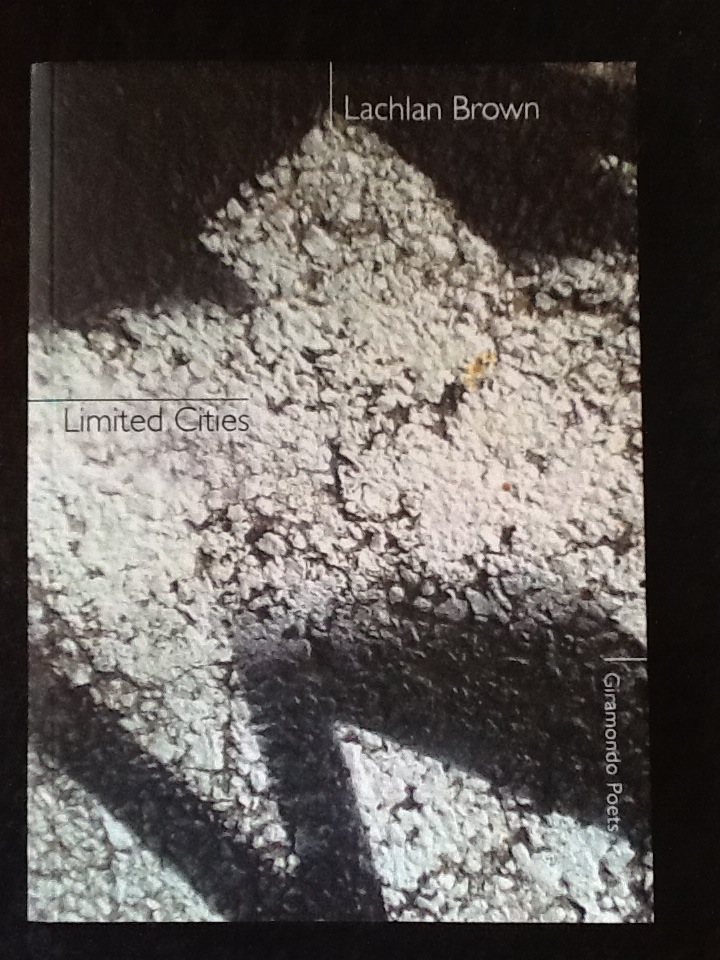
Lachlan Brown – ‘Limited Cities’ (2012)

Ross Clark (2007); Michelle Dicinoski (2011)
Ross and Michelle are poets that I’ve met since working at QUT, and I got to know Lachlan when he visited my class as a Red Room Company poet. Knowing a little bit about these poets has helped me to engage with their work, but honestly, they are all just bloody good! Have your library order them 🙂
- Lachlan Brown: ‘Limited Cities‘ (Booktopia link)
- Michelle Dicinoski: ‘Electricity for Beginners‘ (Amazon link)
- Ross Clark: ‘Salt Flung into the Sky’
RSA Animate ‘Drive’: Purpose, mastery, self-direction
Posted in education, university, video games on December 12, 2012
I just came across this excellent 10 minute clip from the RSA Animate series. It was put up in 2010 and has had over 9.6 million views on YouTube, so some of you may have seen it the first time around. The clip is called Drive: The surprising truth about what motivates us, and is an animation of a talk by Dan Pink.
I’ll be adding this clip to my English Curriculum Studies reading list next semester – a way to link with my students’ other studies in ed. psych.
I’ll also be making a bigger effort to bring in those concepts – mastery, purpose and self-direction – to explain the pedagogical strategies involved in project-based, play-based, inquiry-based and challenge-based learning. I’d be grateful for any insights about this that you folks care to drop as a comment here!
Enjoy the clip!
Building up my Pinterest resources
Posted in education, learning community, online tools, social media, university on December 8, 2012
I wrote a little while ago about my venturing into the world of Pinterest. My first board was a collection of images and links relating to ‘Indigenous Studies‘.
This post is just an update on what else I’ve been pinning that other teachers might like to check out.

English teaching – Pinterest board
On my board for English teaching I have links to professional associations, related groups and institutions, magazines and journals, classroom resources for English, and other stuff I think an English teacher might like.
Pinterest board – Learning
When I started finding resources for learning in general that weren’t specifically about English, I created this board for pins about Learning. There are some especially good things up to re-pin from Edutopia and Edudemic.

Pinterest board – Brisbane
Finally, so that this post isn’t ALL work and no play, here is a link to the board I use to collect links to cool things to see and do in Brisbane. This board is great for when people come up here to visit, it means we always have a good list of things to do and see 🙂
If you’ve never used Pinterest before…
- Don’t stress out about missing out. I don’t see it as one of those “you absolutely GOTTA have an account!” tools. Anyone can go and browse my Pinterest boards, which I’ve invested time in because I like to curate, and also because I think my students enjoy the visual layout of links they would otherwise ignore in a reading list.
- My ‘addiction’ (read – compulsion to add pins!) to this tool waned after about four weeks, but I still find myself coming back to it and liking it five months after signing up.
- If you do decide after reading this post to go and make some Pinterest pin boards, ENJOY! I’ve really dug finding new resources this way, as well as thinking more carefully about how an icon or image ‘pin’ can represent an idea, association or resource.
Nominated!

- Australian English Teachers
 9 members
A group for English teachers in Australia to discuss the books they are reading, and the books th...
Books we've read
View this group on Goodreads »
Share book reviews and ratings with Australian English Teachers, and even join a book club on Goodreads.
 Kelli McGraw
Recent Comments