5 reasons why HSC and ATAR scores make the angels cry
- The Australian Tertiary Enrance Rank (ATAR – formerly UAI in NSW) is, as its name suggests, a RANK. A rank against other students. This means that everything students have worked for over the HSC year is reduced to little more than a rung on the ladder, where it’s only possible for a few to stand at the top.
- Students who are competing for grades don’t tend to like helping each other learn. The HSC encourages selfishness in learners.
- HSC marks are divided into BANDS. Band 6 (marks of 90-100) is the highest. Everyone wants a Band 6. Or “at least a Band 5!” In his review of the HSC in 1996 Professor Barry McGaw recommended the removal of Band labels, explaining that schools, students and parents were largely ignoring rich assessment feedback relating to actual learning outcomes. Instead they were simply increasing pressure on kids to attain high status Bands. But the NSW BOS ignored McGaw’s recommendation (and the NSW government later introduced mandatory A-E report grading for all primary and secondary students to boot…that’s when the angels really started howling)
- School is supposed to be a place where you receive an education that promotes social, emotional, physical and cognitive growth. Credentialing methods that only report on academic achievement undermine the work that schools and communities to do to help students grow into healthy, happy and resilient human beings.
- There is no way to acknowledge students who are acheiving their personal best. It’s all about who wins…and who loses.
Don’t even get me started on how the whole process is geared toward selecting which students will enter which University course – despite the fact that only 30% of students will actually go to University. Or on the research findings of studies of the effect of stress, anxiety and depression on student motivation and goal orientation. Or on how an exam driven curricula encourages teaching to the test over promotion of engagement and deep knowledge.
I don’t mean to take the buzz away from any Year 12 teacher or student out there today who is enjoying shiny results. If you’re wondering, I’m very pleased with mine. But the conversations I’ve had to listen to today (and every other year when these results bear down on schools) have made me sick to the stomach. HSC and ATAR scoring is my very least favourite part of being a teacher…I hope the utopia I’ve heard about up here in Queensland is everything it’s cracked up to be.
Hit Refresh!
Posted by kmcg2375 in conferences, english, online tools, social media, technology on December 4, 2009
Last weekend I attended the English Teachers’ Association Annual Conference in NSW, which was held at the University of NSW on Friday 27th and Saturday 28th of November. The conference theme was ‘Hit Refresh!’, so it was apt that this was the first conference we have run that had an officially constructed online aspect, using both Ning and Twitter to engage presenters and participants in discussion and networking before, after, and behind the scenes of the conference.
This (longish) post is a report I wrote on the success of these online tools at the conference.

Many educators by now have heard of ‘blogs’, ‘wikis’, and learning management systems such as Moodle, and hopefully we are fast approaching a time where the these strange names and terms are accepted as useful (rather than childish) jargon. In the meantime, jokes about the ‘Ning-nang-nong’ and Twitter users being ‘twits’ will abound. But while these tools might sound goofy, they are anything but.
Ning.com is an online tool that is fast gaining popularity with educators. It combines many other features for writing and connecting online – such as being able to have a personal profile page, make ‘friends’ with other members of the Ning, write blog entries, add to discussion forums, and join sub-groups – and for that reason the term Ning was coined to describe the NetworkING that occurs on the site. For our conference we created a Ning a few months ahead of the conference (http://etaconf09.ning.com/), set up all of our conference workshops, presentation, keynotes and plenaries as ‘events’, invited presenters (first, then later, people who had registered for the conference)…and waited.
The response was slow but sure. Before the conference had even started we had 70 people who had joined as members of the Ning. ETA committee members and presenters who were keen to explore the Ning started adding discussions and material right away. New presenters felt welcomed and included in the lead up to conference, and could ask questions and establish contacts with others before arriving on the big day. On the Thursday before the conference, the number of members had grown to 130. Many more joined up during and following the conference, and the count currently stands at 230 members. Some presenters used the Ning directly in their workshops, getting participants to add their own questions, ideas and resources. Many people were glad to have an easy way of contacting and keeping in contact with other members, and as many people did upload information about themselves, including a photo to their profile, there was a definite sense of familiarity and closeness at the ‘real life’ conference between Ning users.
As well as establishing a conference Ning, the micro-blogging service Twitter.com was used to ‘tweet’ short, 140 character updates from the conference, in particular from the Saturday morning panel on National Curriculum. This allowed attendees to create a ‘backchannel’ at the conference, communicating with others from around the globe, as well as other members at the conference, about events as they happened. Before the conference I blogged a description of a backchannel, which was used at the conference to explain the concept.
As this was our first attempt at using a backchannel, we decided not to display the tweets live on a big screen behind the speakers – though this is something that is occurring frequently now at many conferences that use a backchannel. For our own, and the speakers’ peace of mind, Darcy Moore and I fielded questions and comments that came in via Twitter at the same time as chairing the panel and the real-life questions from bodies inside the auditorium, and integrated these into the plenary. The response was very positive, and people (speakers included) only seemed disappointed that we didn’t display the tweets on the big screen!
So, next year we are bound to do this again, with the screen on live display. Using technology this way can be risky of course, as there is far less control being exercised when members can publish their unfettered thoughts for all to see. But the benefits of this far outweigh the risk, and the message from members was ‘bring it on!’
Increasingly, educators are connecting online in very powerful ways. This includes English teachers. As online tools become easier to use to connect, communicate and collaborate with colleagues they are being seen as more of a joy (and a time saver) than a chore. I heartily encourage other professional associations to consider adopting online elements for future conferences and events, and would be happy to share ideas and advice with anyone who is going in that direction.
Anyone else care to share their experiences or tips?
English Teachers: Waving, not Drowning
Posted by kmcg2375 in english, online tools, technology on December 2, 2009

I have Google Wave!
Well, I’ve had it for a week now, but have had no-one to play with in it (on it?), so effectively I didn’t have it at all.
But now I have Wave buddies 🙂 And so the messing around begins!
I’m joined by fellow English teachers and Tweeps Bianca (@BiancaH80), Julie (@JulBain), Darcy (@Darcy1968) and soon also Troy (@TroyM7).
The Negative Nancy in me is screaming “Don’t bother! They’re never gonna let you use anything this USEFUL in school anyway (because lewd images and pervy old people COULD be on a Wave too – QUICK EVERYONE, HIDE THE KIDS!)”. But after using it for not very long at all, you just know that this is one of those things that is going to have a big impact on how we ‘do’ activities, lessons, even school. Web 2.0 tools have opened up a whole new world of collaborative working and creating, but the way Google Wave uses in-text editing, integration of images and video, real-time editing (you can see each other type!) and, perhaps most excitingly, playback (so you can see additions and comments appear in the order they were added)…it just has oodles of potential that I am only just comprehending. And best – it’s really FUN to use!
Just now, I have started a collaborative poem with my English teaching ‘Wavers’ – I wrote in a couple of lines, and hopefully others will add and we’ll see how it goes. (I would love ideas for other English-y activities/tasks for us teachers to trial on a Wave, if you have any?)
Maybe this is what I find the most fun – getting to try old activities in new ways by testing them on myself!
Or, is it the real feeling of a ‘playground’ that I’m getting by making a collaborative Wave with my peers?
All I know is that tonight, with Twitter AND Wave going bananas, I felt like a teen on MSN or something! My PLN just got so much more…personal. I wonder if the novelty is going to wear off?
Edublog Awards 2009
Posted by kmcg2375 in online tools, social media on December 1, 2009
These Edublog Award nominations go out to all the amazing PLN peeps who have helped, inspired and motivated me this year:
- Best individual blog: Occasionally Humorous Thoughts and Ramblings from a K-12 Superintendent. http://www.principalspage.com/theblog/
- Best individual tweeter: He knows what we all need to know! @Darcy1968 twitter.com/Darcy1968
- Best group blog: Johanna Featherstone shares poetry news and stories from The Red Room Company http://redroomcompany.org/wordpress/
- Best new blog: Sarah is collecting and blogging some great resources for using web2.0 in teaching http://skorlaki1983.edublogs.org/
- Most influential series of tweets: best micro fiction ’12 Word Stories’ published via Twitter by @12words twitter.com/12words
- Best teacher blog: Occassional partner in crime, the one-man PLN, Darcy Moore http://darcymoore.net/
- Best librarian / library blog: Judy O’Connell – a wealth of resources and insight for my librarian and I http://heyjude.wordpress.com/
- Best educational tech support blog: Moodler and nice guy Tomaz Lasic http://human.edublogs.org/
- Best educational use of video / visual: Multimodal episodes about Alice http://www.inanimatealice.com/
- Best educational wiki: Sue Water’s PLN wiki http://suewaters.wikispaces.com/
- Best educational use of a social networking service: The Educator’s PLN Ning http://edupln.ning.com/
- Best educational use of a virtual world: Virtual Macbeth (Second Life) by Angela Thomas http://virtualmacbeth.wikispaces.com/
- Lifetime achievement: Mark Pesce http://markpesce.com/ who I have never seen talk irl, but who is a visionary, and always makes me desperate to be way smarter than I am 😉
…plus so many other connections and friends who’ve helped me to sustain my energy this year, in particular via Twitter. Special mentions go to my Boss @jmun31 who has heartily embraced the 2.0 world, and to @MaralynParker who generously replies to many of our education tweets, and keeps debate flowing.
Happy blogging and PLN-ing into the New Year 🙂
ETA Conference: The Backchannel
Posted by kmcg2375 in conferences, english, online tools, social media, technology on November 26, 2009
Friday morning will see Darcy and I braving the stage prior to the opening of the annual English Teachers’ Association conference ‘Hit Refresh‘.
Why?
Because for this ETA conference, for the first time, the conference is going web 2.0 – we’re stepping up the interaction, participation, and networking by providing some seriously cool online spaces for teachers to wet their toes in, and hopefully also dive right in to! So, we’ll be getting up (in our awesome Twitter t-shirts 😉 ) to show the folks at the conference how to get involved in communicating with others, and how to use the backchannel.
What is a ‘backchannel’?
You know when you’re sitting, watching a keynote or presentation, and if you know the person in the next seat you might make the odd remark in their ear? Well, a backchannel is like doing this on a mass scale – it’s like having a silent ‘channel’ on in the background for anyone who wants to make comments or ask questions that the rest of the audience can see, and if they want, silently respond to.
It’s like passing notes for grown-ups. Ones that you know the teacher can read too if they so choose (so you can be critical, but must also be polite!)
From wikipedia:
The term “backchannel” generally refers to online conversation about the topic or the speaker
…it is the practice of using networked computers to maintain a real-time online conversation alongside live spoken remarks.
What are we using?
The most effective way of paticipating in a live backchannel during the conference is to join Twitter, and post short 140-character messages called ‘tweets’. Anyone who ‘follows’ you can see your comment or question – and some people might also respond.
Do I have to have a lot of followers for this to work?
(or ‘yikes! but I’m not that famous yet!’)
If you are new to Twitter, never fear. If you tag your tweet with the ‘hashtag‘ ETAConf09, then the comment that you tweet will also be seen by anyone who has searched for that tag – not just the people who follow you. This means that even if you have NO FOLLOWERS, you can add to the backchannel discussion, and people can tweet responses to you. Here is an example:
Wow! I thought Kelli and Darcy did a great job explaining the backchannel! #ETAConf09
To which another user might reply:
Does anyone know where I can find the video they showed at the start? #ETAConf09
You see the potential here? And it’s easy!
What’s this I hear about a conference ‘Ning’?
‘Ning’ is the cute name that the people over at Ning.com made up to describe their online site that is used for NetworkING. It’s a very easy site to use, and a great way to introduce yourself to online learning if you haven’t already.
ETA members (all of you – whether you are physically at the conference or not) can join the ETA conference Ning and add comments and questions there too. Darcy and I will be monitoring the Ning as well, and it is another place that a kind of backchannel will likely spring up. It’s probably less likely that this will happen during the sessions though. I imagine a lot of people will be logging into our Ning on Friday and Saturday night, and for awhile after the conference, to send comments to friends, colleagues and presenters, and to share ideas and resources.
For the most effective participation in a LIVE backchannel, I seriously recommend you use Twitter.
Any questions?
If you have any questions, you can post them here as a comment, or ask them on Twitter. You can find and follow me at http://twitter.com/kmcg2375, or Darcy at http://twitter.com/Darcy1968
See you in the Twitterverse!
Facebook Note: Time to show your colours
Posted by kmcg2375 in online tools, school, social media, technology on November 18, 2009
While many teachers choose not to share their online spaces with students (in Queensland, where I have just moved, teachers are now officially prohibited from communicating with enrolled students on any social networking site), I do have about a dozen senior students (from NSW) who have added me as a ‘friend’ on Facebook.
My personal policy has always been to only add students in my HSC (final year) class. Since going on leave, I have accepted invites from some in year 11 too.
Over the last few days I’ve noticed in my news feed a few of my students becoming ‘fans’ of the group “Your Gay” or “Thats Gay” is a excellent response to ANY situation.
So tonight I posted this in my ‘Notes’ section, tagged the students in question, and waited…
I’ve noticed a few of my friends becoming a FAN of the group:
“Your Gay” or “Thats Gay” is a excellent response to ANY situation.Really?
You REALLY think so?
I guess you must not know anyone who is gay then, or have thought very much about how this might make a gay person feel.
Or maybe you really believe that everyone has ACCEPTED that the word ‘gay’ can be used out of context. Because no-one REALLY thinks that you mean ‘gay’ when you say ‘gay’, right? Like, you’re not actually saying that something is homosexual!
Buuuut…last time I looked, there were plenty of people out there, gay and straight, begging people like you to stop using this word. Plenty of people who are HURT when you say it. Plenty of people who understand the origins of this word being used as an insult, ON PURPOSE, in a very directed way, to literally mean that GAY = BAD. Plenty of people who have suffered verbal and physical (sometimes violent) abuse at the hands of viscious (as well as oblivious) homophobes, just because they are gay.
But hey, it’s just a word, right?
Ah ha! I know – maybe you think you are a postmodernist, and you believe that words should be detached from their historical meanings so they can be used again in new and exciting ways. Ironic ways! Contradictory ways! In ways that are self-reflexive, and therefore actually subtly critical of social institutions at large! (Wow, that would make you pretty smart…but I just can’t help but think that Derrida and Foucalt had other things in mind when they encouraged people to challenge social norms.)
If you’re tagged in this note then you probably don’t think that “gay is just another word for happy” is a good reason to use the word ‘gay’ as an insult, because that whole argument just makes no sense whatsoever…and I’m not usually friends with idiots! No, chances are you don’t think that, anymore than you think anyone actually uses the word “faggot” in regular, non-woodsman-type life to describe a ‘bundle of sticks’.
MAYBE you’re actually a social activist, and you’re trying to reclaim the word ‘gay’ the way that black people reclaimed the word ‘nigger’, or the way the GLBT community reclaimed the word ‘queer’. But if you thought about THAT for longer than two seconds, you’d realise that no…using a word as an INSULT doesn’t count as reclaiming language. In fact it’s kinda the opposite. It’s more like how when people say ‘nigger’ as an INSULT they are being RACIST.
(Though perhaps you have never watched important historic speeches like Martain Luther King’s famous ‘I Have a Dream’ speech, and really been shocked at what African-Americans had to endure at the hands of the law, let alone at the hands of racists citizens, back in those days. Like, did you know that black people couldn’t vote! That they were made to ride on the back of buses! Kinda like how women couldn’t vote at the turn of the last century – or how they weren’t allowed to buy property, open bank accounts, or divorce their husbands! Or like how gay people are not allowed to get married, or adopt children as a couple, or work for schools owned by the Church! Oh…wait… that’s now. My bad.)No, I DON’T think that “You’re Gay” or “That’s Gay” is an excellent response to any situation.
And friend, I don’t think you’re cool when you say that it is.
You know for a FACT that it is hurtful to use ‘gay’ as an insult, so now you have the choice – are you gonna do it anyway? How mean are you? How disrespectful to the struggles of countless others, their families and friends? How callous? How cruel?
Use your imagination and come up with a new word already.
It’ll take you awhile to kick the habit, but it’s worth it.
Swear if you have to.AND UN-JOIN THAT STUPID GROUP OR UN-FRIEND ME!
The response was immediate, and resoundingly positive. Many students who picked the note up through their news feed ‘liked’ the note without being invited. Here are some of the comments that were posted:
“never thought of it like that, unjoined!!”
“thank you for showing me the light 8P”
“yer that is totally fair enough. i actually joined on account of an injoke with some friends, and the group related to the context of the situation, but fair point.”
I also got some lovely messages from fellow teachers who shared their stories and experiences, and the students would have read this too.
So…cost/benefits of dipping into the ‘teacher’ role on social networking sites? You tell me. But I just got a whole bunch of students to leave that stupid group, and some are re-posting the note to their friends. For tonight, 100% worth watching my online p’s and q’s to ensure I maintin my duty of care.
Teaching Excellence Award
It has been really nice over the past couple of weeks to get messages of congratualtions from friends and colleagues via Twitter, Facebook and email about the Award for Teaching Excellence that I recieved on the 29th of October.
THANKS EVERYONE!
My Highly Commended Award was in the Beginning Teacher category, and the other beginning teachers I met were truly inspirational, and humble. Three out of the six of us were doing PhDs, can you believe it! Now, don’t feel pressure anyone – it was a really skewed sample – but it sure was nice not to feel like an overqualified freak, just for a couple of days 😉

Julia Gillard presented the Awards, and she came across as genuine and warm. Her speech was quite uplifting, with lots of great comments about the quality of our teachers and schools, and a long list of what the Government was doing to make things even better. Just a quick, camoflaged comment about improving schools by increasing “transperancy” raised my hackles, and the sudden bristling of many of those around me was palpable.
I did seriously consider taking a second on stage to mention to her what a bad idea we all thought school league tables were (even though this fact is well evidenced, and old news to boot, it reamins one of her goverment’s pet missions. They even made NSW back down), but at the end of the day everyone was just being so nice and celebratory, it really didn’t seem right. Guess that is me getting more wise and mature, huh. Mum calls it ‘having a sense of occasion’…

But I digress.
South Western Sydney had quite a big proportion of Award winners – from Macquarie Fields, Casula, Campbelltown and Macarthur. This was not altogether surprising, as I have seen first hand the remarkable energy, motivation and commitment that comes from most teachers in this area. I am so proud to be from and work in this region! Only question is, as the region keeps getting better and better, will we lose our ‘underdog’ status? And if so, will we lose some of our drive?
Some other people I met during the Professional Exchange sessions that were doing really interesting stuff included teachers and Principal’s from schools that were running a safe a supportive alternative curriculum for pregnant students and teenage mothers, and that had developed an authentic, problem-based and cross-curricular approach to teaching mathematics.
It was also delightful to run into someone from Youth Off The Streets, who had received an award for the program’s school-community work with Key College, and also worked in my local area.
Teachers and schools sure do work hard. So great to see ‘what it is all for’ on such resplendant display. Congratualations everyone!
Facebook Status Update Cloud
Posted by kmcg2375 in online tools, social media on October 28, 2009
Made using application built by Status Cloud:
 Freq: bed. day. drama. english. getting. home. students. tomorrow. weekend. year. (how mundane!)
NING tip for teachers
Posted by kmcg2375 in online tools, school on October 22, 2009
Of all the online teaching tools (edublogs, pbwiki, wetpaint, voicethread, twitter…facebook!) I have used in the past couple of years, I would have to say that the most successful (and my favourite) was the general purpose, customisable networking site, Ning.
I have used Ning now to coach debating teams, and to provide online homework/study support for my classes.
Here is a tip:
(it is one of my FAVOURITE things to do, because I would have loved this as a student!)
Turn on the photos section of your Ning. At the end of important lessons, take a digital photo on your camera or phone of your whiteboard notes. Post them up as photos on the Ning…really helps those who remember notes visually 🙂
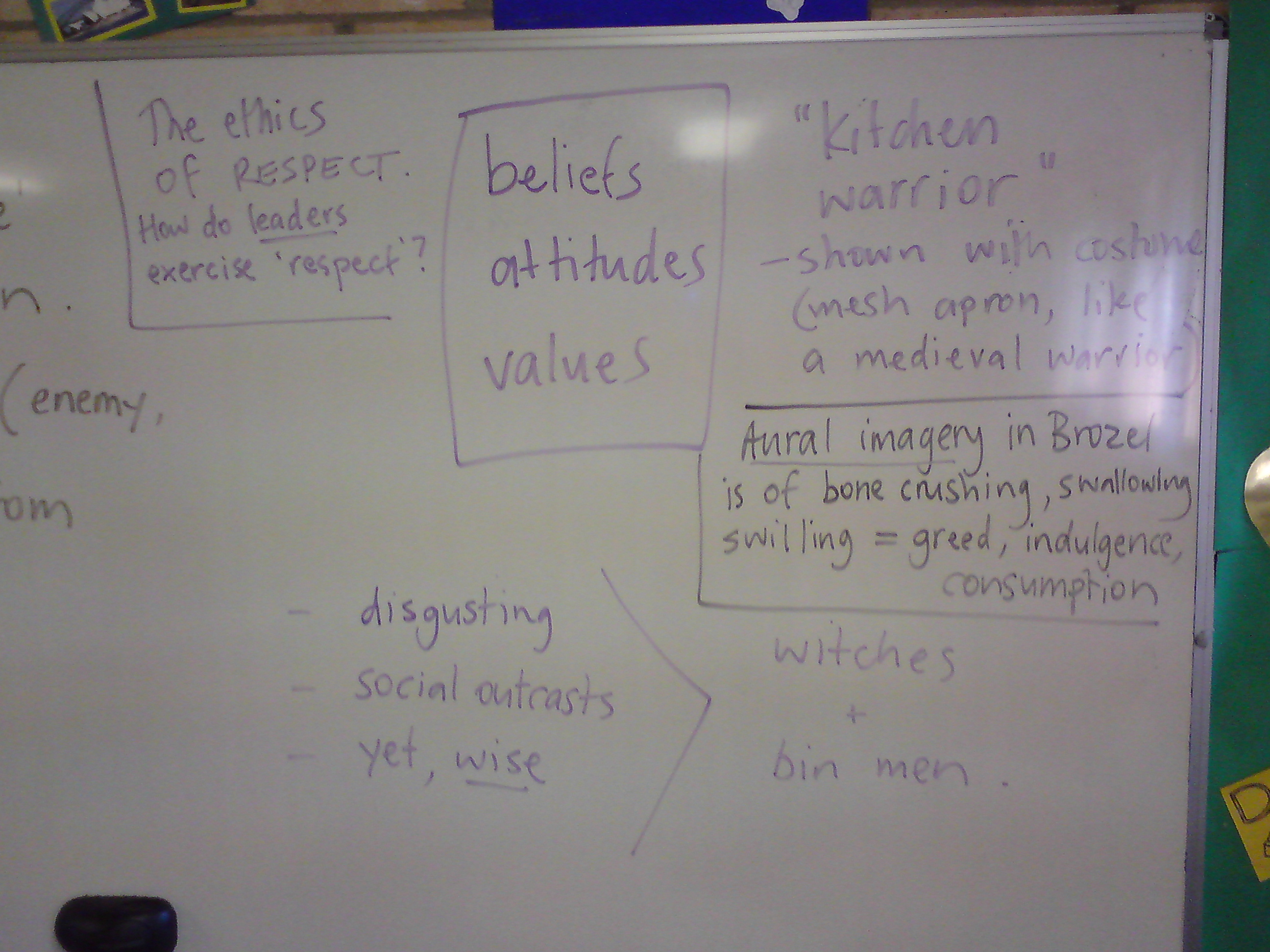
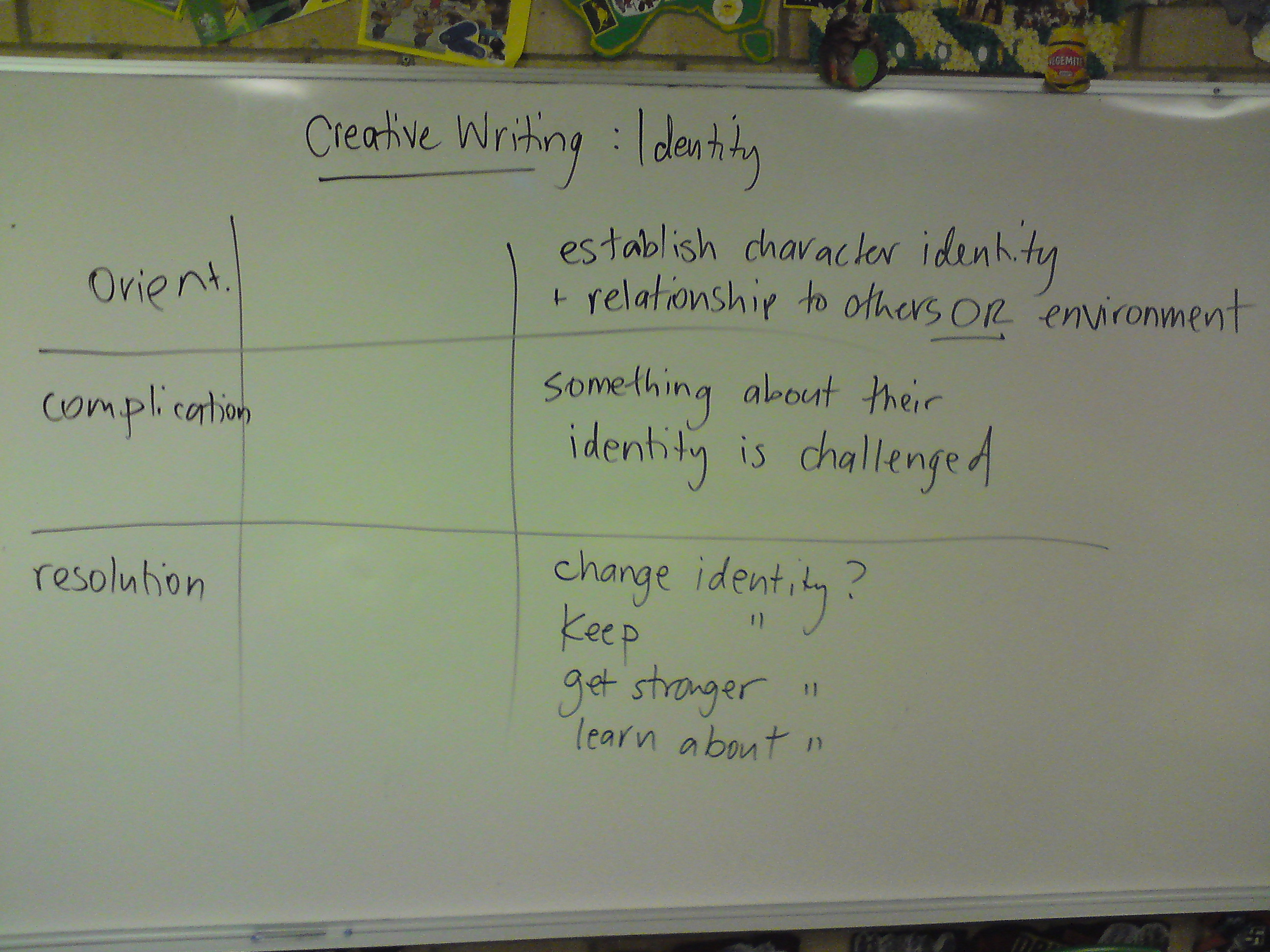
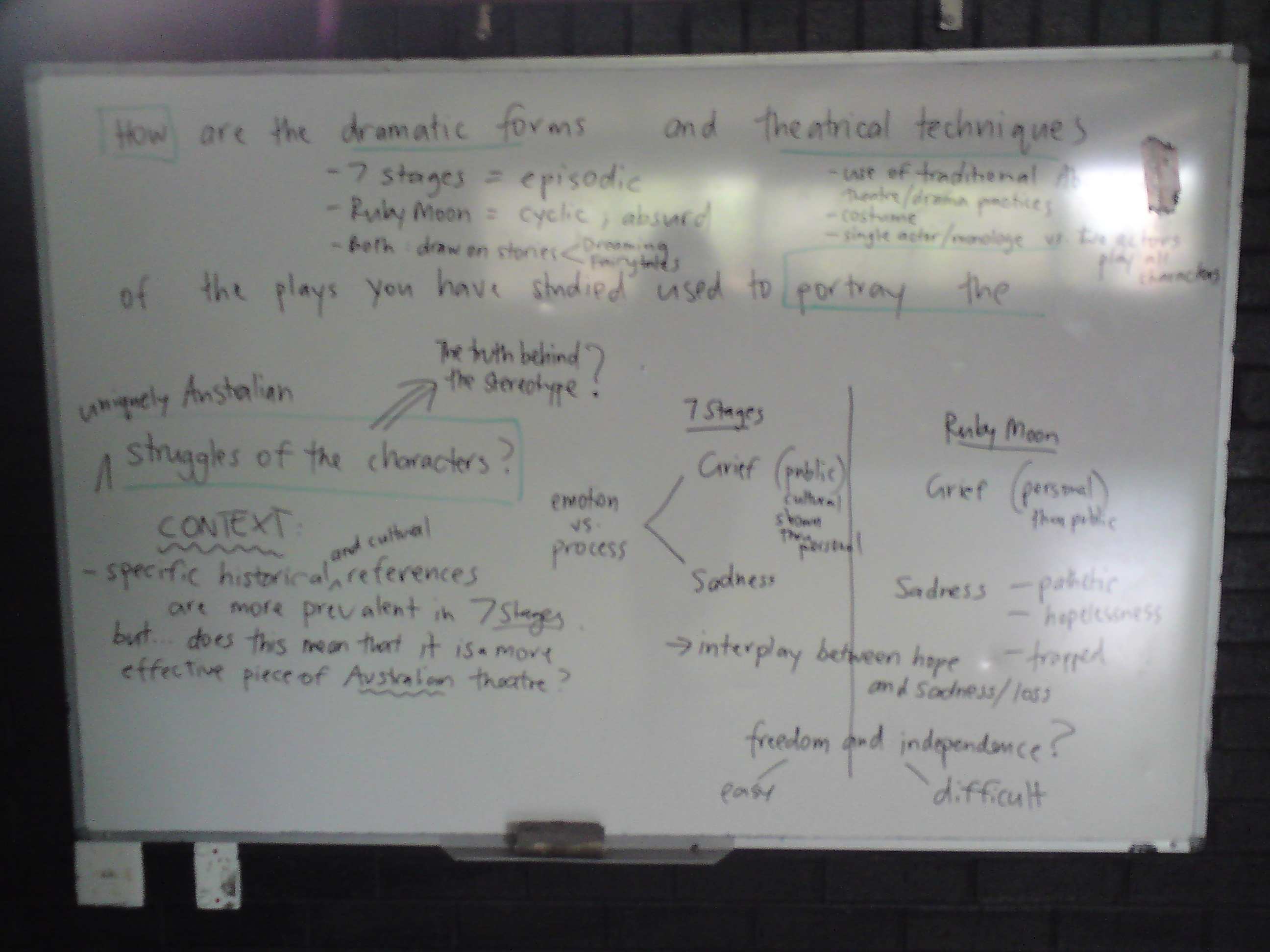
P.S. An excellent example of how Ning has been used by educators for profressional learning and networking is The English Companion Ning, created for English teachers by Jim Burke. Another I have come across more recently is The Educator’s PLN, a Ning created by Thomas Whitby to support the Personal Learning Networks of educators generally.
Nominated!

- Australian English Teachers
 9 members
A group for English teachers in Australia to discuss the books they are reading, and the books th...
Books we've read
View this group on Goodreads »
Share book reviews and ratings with Australian English Teachers, and even join a book club on Goodreads.
 Kelli McGraw
Recent Comments